

Inquests at the Dolphin Inn
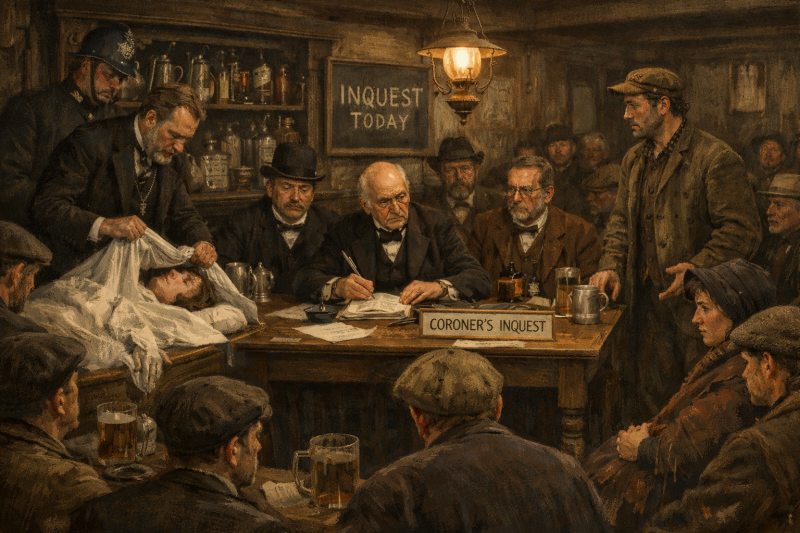
"The coroner frequents more public houses than any man alive." – so wrote Charles Dickens in his Bleak House novel published in the 1850s
Inquests were frequently held in pubs during the late 19th Century and it was standard practice to use local inns for inquests following accidents, suicides, or sudden, unexplained deaths.
The coroner and a jury of 12–24 men would meet, examine the body—a legal requirement until 1926—hear witness testimony, and reach a verdict on the cause of death..
Despite the Coroners Act of 1887 formally discouraging this practice, pubs were chosen for their central location and often doubled as temporary mortuaries, with bodies sometimes kept in cellars, stables, or outhouses.
The proceedings were normally held in an upstairs or back room of the pub, sometimes with their own entrances so that the magistrate or coroner need not pass through the beery throng. But the sounds of conviviality and the smell of alcohol and tobacco smoke would have pervaded the proceedings.
Pub justice was a nice little earner for the landlord, who benefitted from payment for the room and the increased custom petty sessions and inquests invariably brought, with locals and thirsty witnesses quenching their curiosity and thirst.
It remained common in England until the early 20th Century because many areas lack dedicated suitable public building. driven by campaigns for proper municipal mortuaries following complaints about the unhygienic conditions of storing bodies in pubs.
Until 1926, it was a legal requirement for the coroner and jurors to view the body and this could sometimes be a rather gruesome experience, particularly in the case of the growing number of railway and industrial accidents.
Our research of Tamworth Herald's and from wider sources, have found reports of inquests being held at the Dolphin Inn between 1879 and 1933 covering a wide range of cases including deaths by natural causes, those with suspicious circumstances and also following unfortunate accidents at the local coal mines.
More reading
UK Parliament - Investigating Deaths
Create Your Own Website With Webador